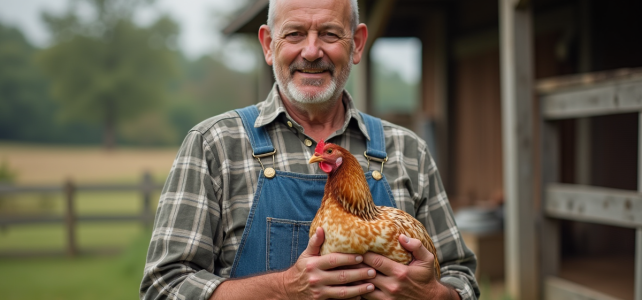
A rooster can recognize more than a hundred different faces among its peers. Contrary to a widespread belief, the hierarchy among hens does not depend solely on strength, but adjusts according to age, experience, and the personality of each individual.
Some breeds lay continuously, even in winter, while others stop all production at the slightest change in temperature or light. Unusual behaviors, sometimes mistakenly interpreted as illness, often reflect an unmet need or unidentified environmental stress.
What Chicken Behaviors Really Reveal in Daily Life
In the backyard, it is hard to overlook the role of the hen: its social organization leaves nothing to chance. Behind the famous pecking order lies a nuanced system that shapes every collective action, from sharing food to taking a place on the perch. Some breeds, such as the Bantam of Beijing, shift the dynamics: their curious nature and peaceful character ease group tensions. In contrast, the Braekel hen prefers to keep its distance, observing warily before acting.
The regularity of laying is never a matter of chance. Well-being, stimulating environment, grassy space, impeccable cleanliness: everything comes into play. A sudden change, noise, modification of the diet, sudden intrusion, and egg production drops immediately. In the heart of the henhouse, every detail counts. The instinct to nest takes over, with each egg laid after a precise ritual and careful selection of the location.
Social interactions go beyond mere survival. Dust baths, sound exchanges, and the ability to remember faces reflect a rich sensitivity, often underestimated. Coexistence with other species, such as rabbits and guinea pigs, occurs smoothly, with each finding its place in this living microcosm. Encounters with other animals, notably the female duck, mentioned in “Female Duck: Its Name and Specifics – Animal Blog,” further illustrate the diversity of behaviors observed in the backyard.
To better understand the richness of temperaments, here are some examples of breeds with distinct profiles:
- Brahma Hen: placid, massive, with a laying capacity of up to 150 eggs per year.
- Padua Hen: recognizable by its beard and muffs, excellent brooder, around 100 eggs per year.
- Braekel Hen: independent, resourceful, with an annual production that can climb up to 200 eggs.
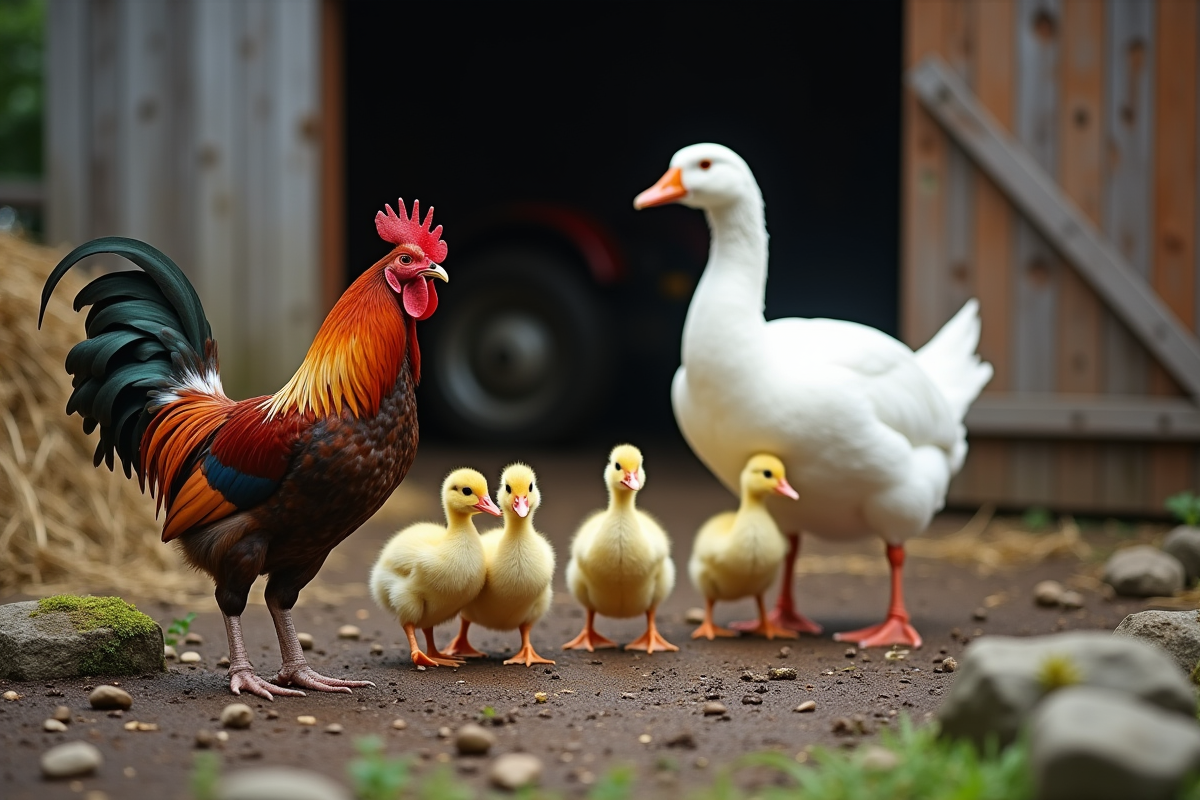
Effectively Protecting Your Henhouse: Practical Tips for the Well-Being and Safety of Poultry
The henhouse becomes the center of attention when it comes to security. The predator, with the fox at the forefront, does not wait for the slightest flaw to invite itself to the table. Hens, chicks, as well as rabbits and guinea pigs are on its list. To avoid unpleasant surprises, one must focus on insulation: a buried, sturdy fence thwarts the plans of weasels and rats. On the roof, a tight mesh serves as an additional barrier.
Vigilance does not stop there. Maintaining the cleanliness of the henhouse remains a daily reflex: dry bedding, frequent cleaning, clean waterers. These habits limit the risk of disease and help reduce stress, thus promoting laying. Whether Brahma or Bantam of Beijing, all expect this consistency. The routine, opening at dawn and closing at dusk, regulates their balance.
To provide a complete living environment for the poultry, several aspects need to be considered:
- Stimulation: vary the routes, provide hiding places, install perches. These arrangements encourage activity, dust bathing, and strengthen group cohesion.
- Feeding: distribute diverse grains, supplement with vegetables, ensure constant access to fresh water. Feeding evolves according to breed and season.
Through these sometimes trivial gestures, the backyard gains robustness against predators and the whims of the climate. A thriving, well-protected hen continues to lay regularly, whether it is a Padua or a Braekel. Life in the backyard, between vigilance and routines, weaves its daily share of surprises and small challenges to overcome.