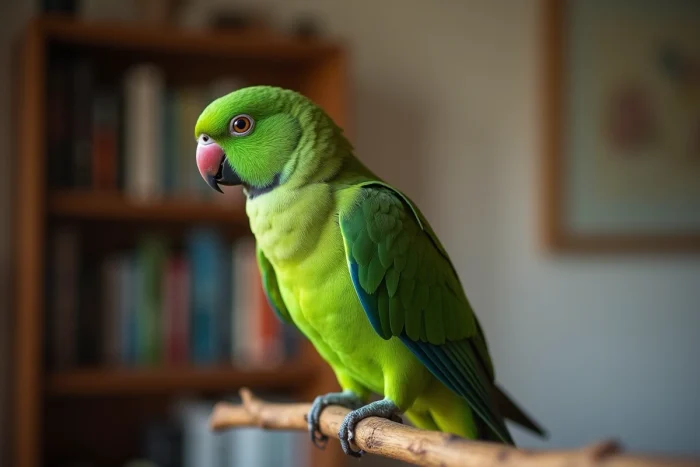
The rankings of animal speech sometimes leave observers perplexed: some birds, despite having remarkable mental acuity, remain at the bottom of the list when it comes to mimicking the human voice. The green kakariki, a discreet cousin of the chatty feathered ones, intrigues with the sobriety of its sound repertoire.
Breeders’ feedback converges: despite a stimulating environment and numerous attempts, the kakariki’s ability to reproduce sounds remains modest. However, some individuals manage to defy the statistics, surprising those around them with unexpected imitations and a capacity to stand out.
The green kakariki, a bird full of surprises
Originating from New Zealand, the green kakariki does not go unnoticed in an aviary. Overflowing with energy, curiosity, and a need to explore every square inch: this little acrobat of the Cyanoramphus genus is always on the move. The variety of its colors, from bright green to shades of Cinnamon, Lutino, Turquoise, or Cremino, reflects the diversity of its mutations. Two species stand out particularly: the red-fronted kakariki (Cyanoramphus novaezelandiae, also known as Sparrman’s parakeet), which measures between 27 and 29 cm, and the yellow-fronted kakariki (Cyanoramphus auriceps), smaller at 23 to 26 cm. Mixing these two species is not recommended: the breeder community prefers to preserve the uniqueness of each.
The kakariki has established itself on several Pacific islands: Norfolk, Auckland, Stewart, Three Kings, Kapiti, Little Barrier… This aviary companion stands out for its quiet demeanor and marked independence. It enjoys human interactions, but without excessive familiarity: there’s no need to try to pamper it at all costs; it prefers encounters without constraints.
In the wild, it lives between 6 and 10 years, but some individuals born in captivity exceed 15 years. To keep it in shape, its diet must remain varied: seeds, fruits, vegetables, with a touch of animal protein. Caution is advised with certain foods: chocolate, avocado, rhubarb, or raw potato should be avoided. Bathing, on the other hand, is a daily ritual: the kakariki indulges in it enthusiastically and turns every bath into a spectacle.
To learn everything about the green kakariki and discover its behaviors, needs, and vocal abilities, a dedicated page details taming methods, as well as tips to provide an environment suited to its lively temperament.
Can it really talk? What specialists and breeders say
The green kakariki is resourceful, but speech is not its favorite territory. Those who live alongside it note a range of sounds: short cries, cooing, whistles, and sometimes a few syllables that resemble words or familiar noises. However, the general opinion among experts remains unchanged: the kakariki is not a chatterbox. The species primarily expresses itself through movement, attitude, and liveliness.
Breeders like Muriel, who shares her life with Woopie, or Nicole, emphasize this point: this little parrot attracts attention through its presence and intelligence, much more than through the extent of its vocabulary. Familiarity is built with consistency. Approached young and handled with patience, the kakariki can repeat sounds, sometimes a few words, but never with the clarity of a grey parrot or an Amazon. Most prefer to develop their own unique series of sounds, specific to each individual.
Maxime, another enthusiast, notes that the kakariki possesses great social intelligence. It can recognize voices, adapt to household habits, and interact with both its peers and humans. Learning words remains rare, although some progress with daily interactions in a calm environment. Experienced breeders encourage respecting the bird’s pace: no pressure, just the pleasure of meeting and mutual trust.
Here are the key points regarding the kakariki’s vocal expression:
- It uses a wide range of sounds and whistles
- Imitation of speech remains infrequent
- Its sociability and intelligence outweigh its speaking abilities
Beyond speech: the unsuspected talents of the green kakariki
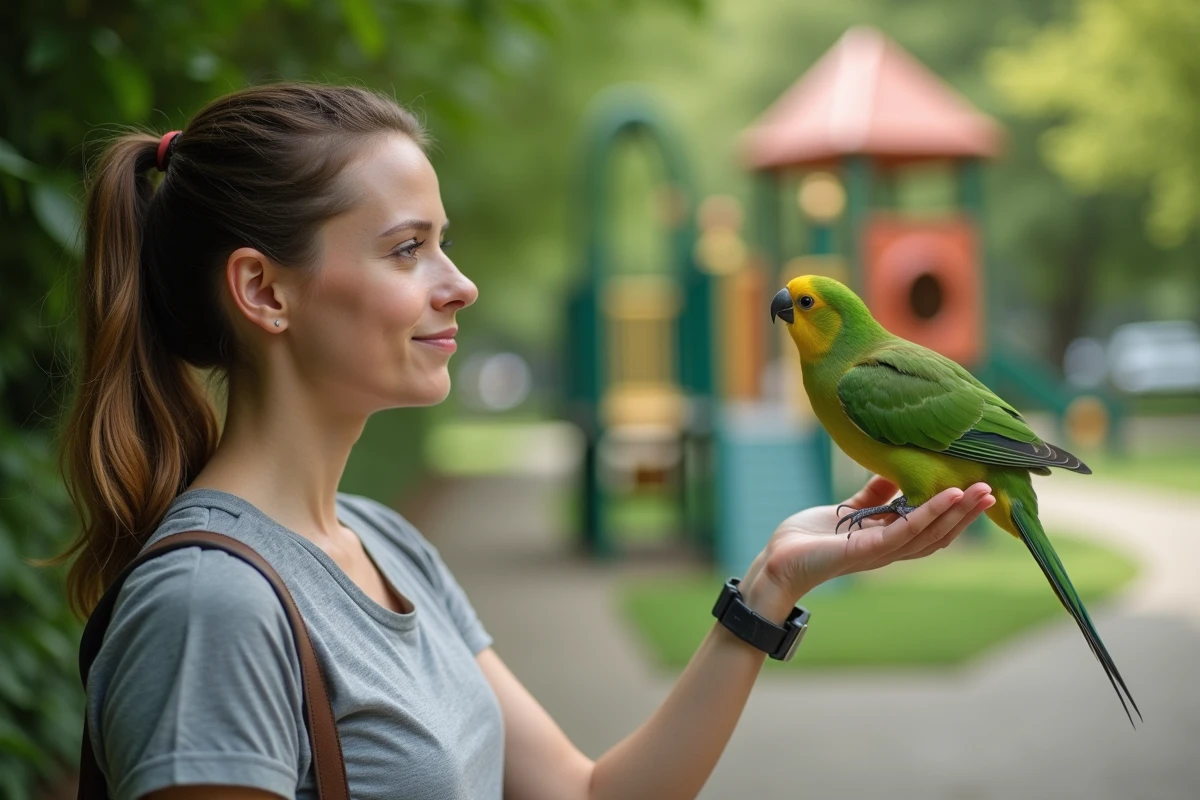
The green kakariki is not limited to its vocal abilities. This New Zealand parrot stands out for its energy and curiosity. Active from sunrise to sunset, it explores every corner of its space, plays, and interacts with both its peers and its caregiver. Its adaptability to both cage and aviary, as long as the space is sufficient, makes it a cherished companion.
Co-habitation with other small birds, such as budgerigars, generally goes well. However, caution is advised during the period when the male reaches adulthood: it may then defend its territory more vigorously. The kakariki does not have a reputation for breaking everything in its path, but it enjoys nibbling on wood and manipulating any object within reach. An enriched space with perches and various accessories is essential to channel its vitality.
Its diet also deserves special attention. Seeds, fruits, and fresh vegetables should make up its meals, supplemented with animal protein. Certain foods should be banned: chocolate, avocado, raw potato, coffee, rhubarb, parsley. Its passion for water is well-known: provide it with a clean bathing tub, and it will enjoy it and display vibrant plumage.
Some notable aspects of the kakariki’s biology and behavior:
- Sexual maturity arrives early (between 4 and 12 months), and it can have clutches of 4 to 9 eggs, with incubation lasting 21 days.
- The male is distinguished by its size, larger beak, and the strength of its cries.
Living as a couple is often recommended: boredom decreases, and aggression diminishes. The green kakariki is a playful, independent bird that prefers to explore the world rather than repeat long speeches. A true pioneer spirit, to be discovered without preconceived notions.