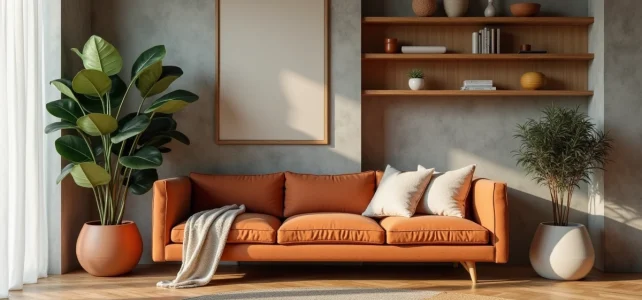
Designing a house or garden in 2024 is no longer just about choosing a wall color or a garden lounge set. Design tools are changing, garden uses are transforming, and available materials are steering projects towards sustainability logics that go beyond mere trends.
AI-assisted co-design: visualize before deciding
For a few months now, applications like Planner5D, Homestyler, or Ikea Kreativ allow users to generate multiple versions of a room or outdoor space from a simple photo. The principle is based on generative AI applied to design: the user photographs their living room, terrace, or entrance, and the tool suggests decoration, furniture, or layout variations in just a few seconds.
This change modifies the timeline of a project. Before contacting an interior designer or going to a store, individuals already explore several concrete visual options. The brief sent to the professional gains precision, which reduces back-and-forth on style or material choices.
To keep up with the latest from Brico Déco Jardin, these digital tools are a useful complement: they help test a color, layout, or type of covering before any purchase.
Self-sufficient and regenerative garden: less water, less maintenance
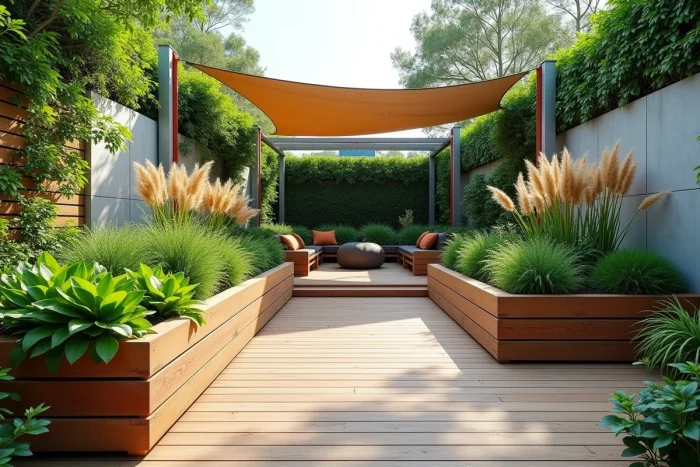
Summer watering restrictions, repeated in many French regions since 2022, have accelerated a concrete shift. The decorative garden, which consumes a lot of water, is giving way to systems designed to function almost without watering and with very few inputs.
Three principles structure this approach:
- The choice of local perennials adapted to the region’s climate, which require neither regular fertilizers nor daily watering once established.
- The systematic mulching of flower beds and tree bases, which limits evaporation and enriches the soil as it decomposes.
- The collection of rainwater, often coupled with a drip irrigation system for the vegetable garden or young plants.
This model is directly inspired by permaculture, but it is now spreading well beyond activist circles. Garden centers offer kits of regional perennials, and landscapers are increasingly integrating these logics from the design phase of an outdoor space.
Multifunctional outdoor spaces: the garden as a living area
The lasting effect of remote work has transformed how a garden or terrace is used daily. The outdoors is no longer reserved for weekends or summer evenings. It now accommodates active uses throughout the day: work, sports, meals, relaxation.
Layouts follow this evolution. An outdoor office corner with electrical outlets and Wi-Fi connection, protected by a pergola or awning, becomes a viable workspace from spring to autumn. Just a few meters away, a mini outdoor kitchen (griddle, sink, countertop) allows meal preparation without multiple trips back to the house.
Lighting and furniture adapted to these new uses
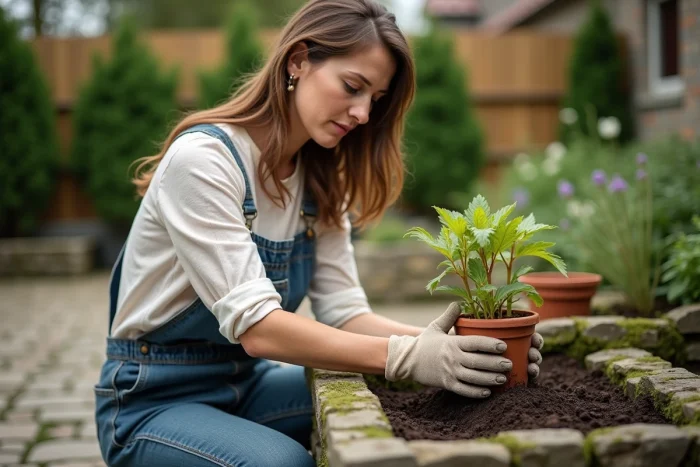
A garden used all day requires layered lighting. Low-consumption landscape lighting, often solar, sets the mood in the evening. Adjustable functional lighting complements the setup in the work area or kitchen.
Furniture follows the same logic of versatility. Current ranges favor lightweight, stackable, weather-resistant seating that transitions effortlessly from the dining area to the relaxation zone. Materials like treated aluminum or high-density woven resins withstand climatic variations without needing covers or frequent storage.
Natural materials and earthy colors: a sustainable grounding in decor trends
On the interior side, the dominant color palette in 2024 remains anchored in natural and earthy tones: chocolate brown, ochre, olive green, warm beige. These shades work well on an accent wall as well as on raw wood furniture or upholstery textiles.
Wood remains the central material in many design projects, both for furniture and coverings. Its combination with elements made of natural stone, terracotta, or linen creates coherent compositions without overwhelming effects. The goal is not to accumulate materials, but to limit the palette to two or three complementary materials to achieve a clear result.
Bright colors do not disappear. They appear in touches, on accessories or specific elements (cushions, lighting, decorative objects), contrasting with neutral bases. This principle of controlled contrast gives personality to a space without compromising overall coherence.
Reuse of materials and circular design in interior design
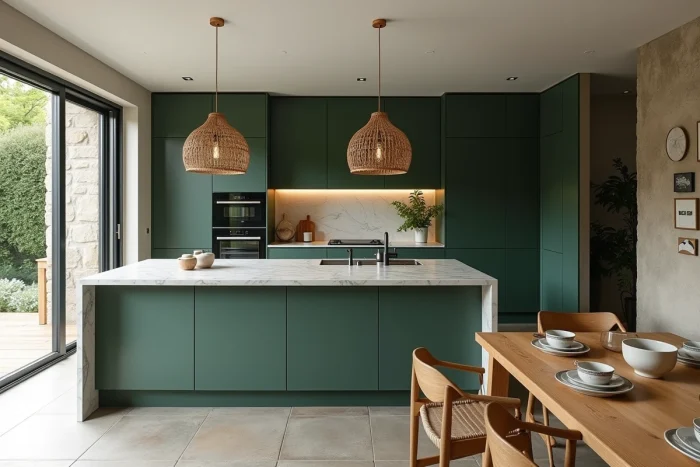
Recent trade shows are increasingly dedicating space to bio-sourced and reused materials: reclaimed wood transformed into countertops, recycled metal for lighting, textiles from second-life sources. This trend goes beyond the aesthetic realm of “vintage.”
Reuse imposes technical constraints. Reclaimed wood must be treated, calibrated, and sometimes reinforced to meet the demands of daily use. The cost can be comparable to that of new materials, but the environmental footprint and the unique character of each piece justify this choice for a growing number of individuals.
Interior design in 2024 reflects a hybridization of influences: Scandinavian minimalism, Japanese touches of wabi-sabi, industrial elements softened by warm materials. The assembly works when each element has a function. A purely decorative object without practical use finds less and less of a place in recent projects.
The design of homes and gardens now follows a converging logic: reducing dependencies (water, energy, new materials), multiplying the functions of each space, and using digital tools to test before buying. The most structuring trend is not a color or a style, but this quest for autonomy applied to every square meter.