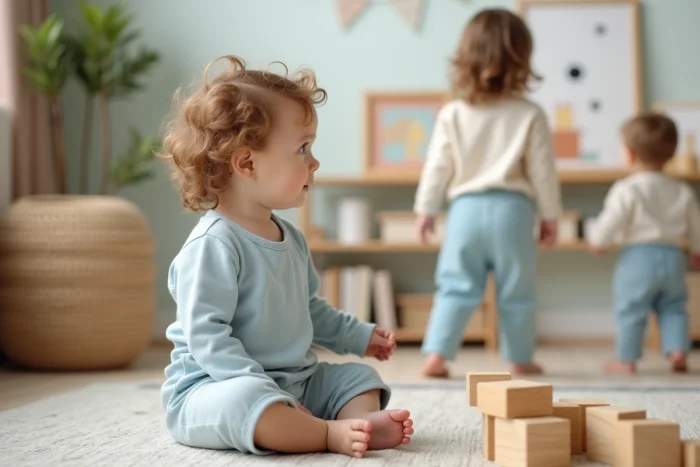
The average age for acquiring independent walking is between 12 and 18 months, with considerable variations from one child to another. Some babies take their first steps well after their first birthday, without this indicating a disorder or global delay.
No scientific evidence links late walking to a higher or lower level of intelligence. Recent studies emphasize the diversity of motor development and the importance of considering all psychomotor acquisitions, rather than a single milestone.
The age of walking in babies: what scientific data says
It is impossible to create a single portrait of learning to walk. This milestone, which fascinates as much as it intrigues, is closely monitored, from pediatric services to research teams. Data from French national cohorts confirm that the majority of children take off on their own between 12 and 18 months. However, reality exceeds this framework: some babies stand up as early as 9 months, while others wait until 20 months, without this being a sign of medical concern.
Psychomotor development follows its own tempo, which is different for each child. Researchers may compile data, but one conclusion stands out: the age of first steps is just one step among others in the mosaic of motor development. Before traversing the room, a child goes through several phases: sitting, crawling, finding their balance, and then daring to take steps without support. Follow-ups conducted in France show that children who do not walk before 18 months develop just as well as others.
Factors influencing the age of walking
Various parameters come into play to explain why each child progresses at their own pace. Here are the main ones to consider:
- Genetics: family history weighs in; when one of the parents walked late, it is not uncommon to see the same pattern in the child.
- Environment: space to move, encouragement from loved ones, and a variety of stimuli make a difference.
- Perinatal health: prematurity, certain medical contexts, or specific neurological disorders can influence the motor timeline.
The topic of late walking and intelligence in babies raises debates and questions among both health professionals and families. To delve deeper, the page ‘Smart Babies: Do They Take Longer to Walk? Tips and Influencing Factors! – BebeBiz’ offers a comprehensive analysis of the issue. Recent research converges: there is no direct link between the age of walking and intellectual development, whether positive or negative. What matters is observing the child’s overall journey, far beyond a symbolic date.
Late walking and intelligence: untangling fact from fiction
The rumor persists, passed down from generation to generation: walking later would be a sign of different intelligence, either superior or inferior. Yet, the facts speak for themselves. Academic studies conducted over several decades are clear: the age of first steps does not predict cognitive abilities or future difficulties. A child who walks at 14 months is no more at risk of cognitive trouble than another who starts at 10 or 18 months.
Each psychomotor development journey unfolds at a unique pace. Whether the child is a girl or a boy, the timeline of their motor progress has no impact on the rest of their story. Specialists are clear: as long as no neurological disorder is diagnosed, late walking simply reflects the natural diversity of rhythms. What counts is closely monitoring the milestones of motor development and valuing the uniqueness of each trajectory.
To better understand this phenomenon, here is what truly influences walking in children:
- Walking results from a delicate balance between brain maturity, family context, and opportunities for free movement.
- Data collected in France confirms that this variability has no impact on future intellectual abilities.
The myth of a correlation between late walking and intelligence does not withstand scrutiny of the facts. The challenge remains to observe each child in their entirety, respecting their own pace, without rushing or making unnecessary comparisons.
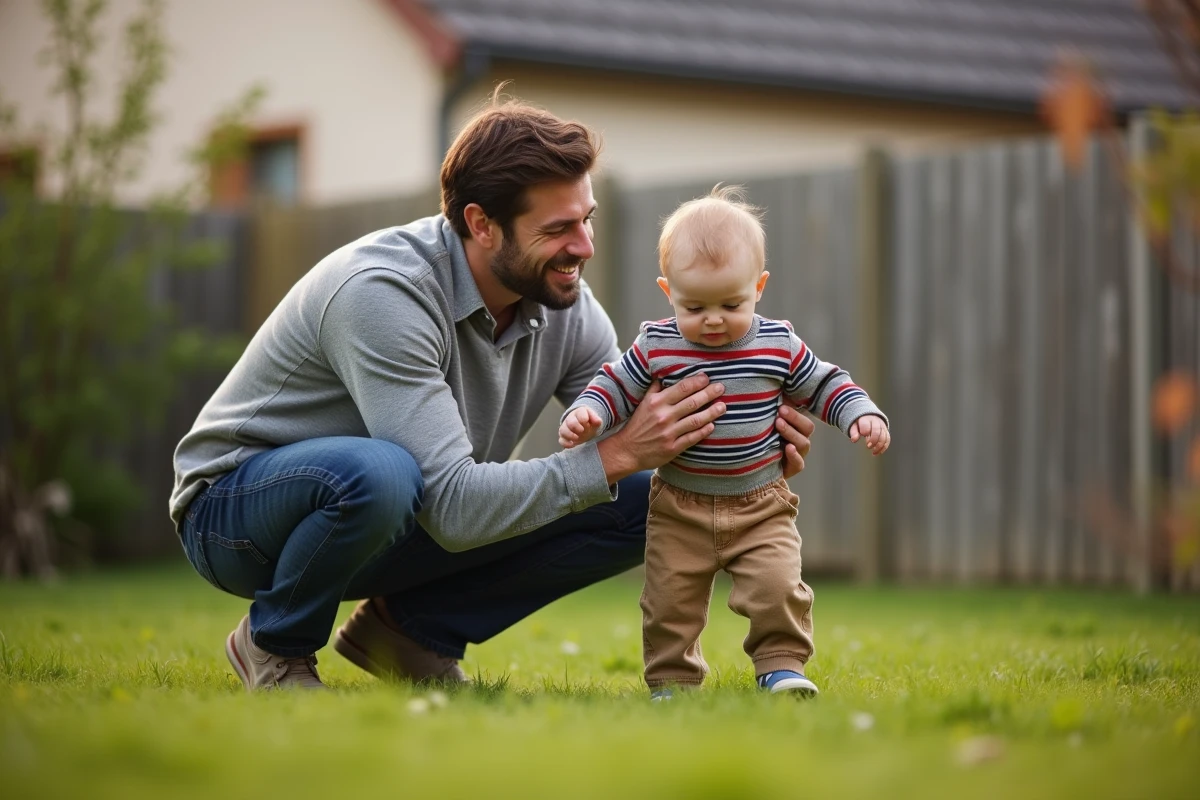
What factors influence the acquisition of walking and how to support your child?
Learning to walk is not a matter of total chance, nor a pre-written scenario. Several variables intertwine: brain maturation, genetics, family environment. Each baby discovers motor skills in their own way, depending on the context surrounding them. Being able to move in a safe space, receiving appropriate encouragement, and exploring freely all promote those first steps.
The principle of free movement is gradually becoming one of the recommendations from professionals. It involves allowing the child to experiment without placing them in positions they do not yet master. This choice encourages autonomy, the development of balance, and self-confidence. The role of loved ones is not neutral: supporting without rushing, valuing each attempt, suggesting but never forcing, is what matters when guiding the child towards walking.
To encourage motor discovery and support the first steps calmly, several practices can be implemented:
- Arrange playtime on the floor, varying surfaces and textures
- Organize the space to remove obstacles and limit risks
- Respond to the child’s request when they seek support, without trying to speed up the stages
Monitoring the various stages of motor development—sitting, crawling, pulling up, walking with support, then without support—remains the best way to identify potential difficulties and encourage progress. Ultimately, the age of the first step has only indicative value. It is the quality of support, the richness of movement experiences, and the trust given to the child that shape their development. Each child progresses at their own pace, and it is this diversity that outlines the beautiful complexity of childhood.