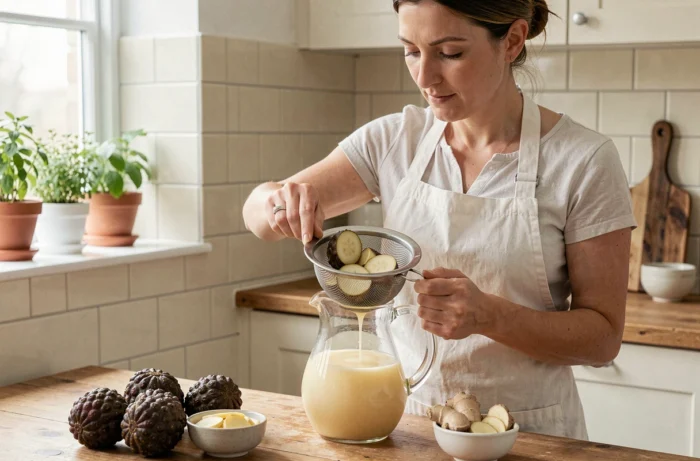
The fermented noni (Morinda citrifolia) according to the traditional Polynesian method and the juice obtained by mechanical extraction of fresh fruits are two products with distinct organoleptic and biochemical profiles. We recommend choosing the preparation method before picking the first fruit, as the required stage of maturity varies radically depending on the chosen process.
Maturity Stage of Noni and Impact on Extraction
Noni goes through two exploitable stages: the translucent white stage, where the flesh remains firm and acidic, and the overripe stage, where the fruit softens and develops a strong characteristic odor that most consumers find off-putting.
For mechanical extraction using a blender or juicer, we work at the translucent white stage. The flesh is easily crushed, the puree is pressed without clogging, and the resulting juice has a moderate bitterness. The CIRAD patent (2013) documents an industrial process that precisely exploits this stage to obtain clarified juice.
The overripe fruit is better suited for traditional fermentation. A glass jar is filled with whole ripe fruits, covered with a cloth, and left to ferment in the sun for about two months. The juice flows out by gravity and is simply filtered.
This process requires neither a blender nor enzymes. It produces a liquid with a much more intense aromatic load, which many find difficult to drink pure. For everything you need to know about noni juice and to adapt your choice of method to your constraints, the picking stage remains the decisive parameter.
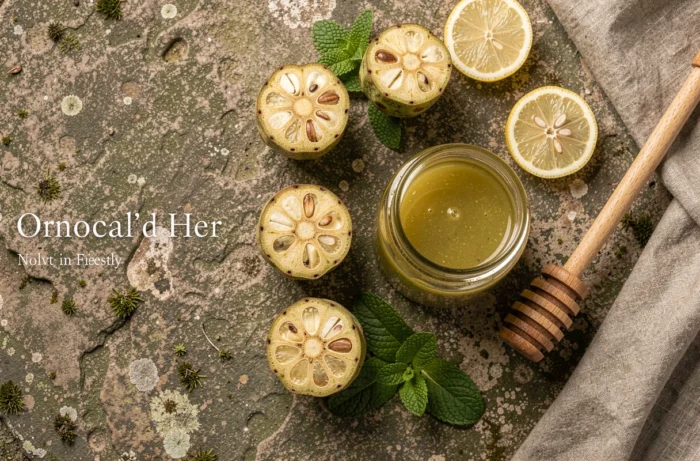
Quick Blender Recipe: Steps and Fruit Combinations
Quick extraction allows for integrating noni into daily nutrition without waiting for two months of fermentation. Here is the protocol we use.
- Wash a noni at the translucent white stage, remove the seeds with the tip of a knife, and then cut the flesh into cubes.
- Add an equivalent volume of fresh pineapple or lime juice to mask the bitterness, and half a glass of filtered water.
- Blend finely, then strain through a sieve or a cotton cloth to eliminate residual fibers.
- Consume immediately or store in the refrigerator in an airtight container, away from light, for a maximum of two to three days.
The pineapple-noni-lime combination works well in terms of taste. Some add honey or banana to soften the aromatic profile.
Storage and Accidental Fermentation
Homemade noni juice contains no preservatives. At room temperature, fermentation resumes within a few hours, altering the pH and flavor.
A fresh unrefrigerated juice must be consumed the same day. In the refrigerator, watch for the appearance of bubbles or a pronounced sour smell: these are signs that the product has shifted to alcoholic fermentation.
Limits of Health Benefits of Homemade Noni Juice
Claims surrounding noni (support for immunity, energy, joint comfort) are primarily based on in vitro studies or animal models. The review published by Silu et al. in Antioxidants (2025) confirms a documented antioxidant potential in the laboratory, but evidence of effectiveness in humans remains limited.
We recommend considering noni juice as a dietary supplement with an interesting nutritional profile (vitamin C, potassium, polyphenols), without attributing proven therapeutic properties to it.
Precautions Related to Potassium and the Liver
Noni contains significant amounts of potassium. Individuals with kidney insufficiency or those taking medications that influence blood potassium levels (potassium-sparing diuretics, enzyme inhibitors) should avoid regular consumption without medical advice due to a risk of hyperkalemia.
Cases of acute hepatitis have been reported after consuming noni-based products. European authorities have not established a convincing causal relationship for all examined cases. The reasonable stance: discontinue consumption and consult a doctor in case of unusual fatigue, yellowing of the skin, or abdominal pain.

Regulatory Status of Noni in Europe and Organic Quality
Pasteurized noni juice from Morinda citrifolia is authorized as a novel food in the European Union. This authorization covers pasteurized juice and puree, not just any extract or concentrated supplement.
A homemade non-pasteurized noni juice does not fall under this authorization. This does not prohibit its domestic production, but it means that the health guarantees evaluated by EFSA do not apply to your production.
The organic label, for those purchasing fresh fruits or juice as a supplement, guarantees the absence of synthetic pesticides on the fruit. It says nothing about the content of active ingredients or health efficacy. Geographic origin, soil type, and drying conditions influence the profile of the final product.
Homemade production offers complete control over the stage of maturity and the absence of additives. However, it does not allow for controlling microbial load or the concentration of compounds of interest with the same rigor as an industrial process that includes filtration and batch analyses. For regular use over several weeks, alternating homemade juice and certified products remains the most pragmatic approach.